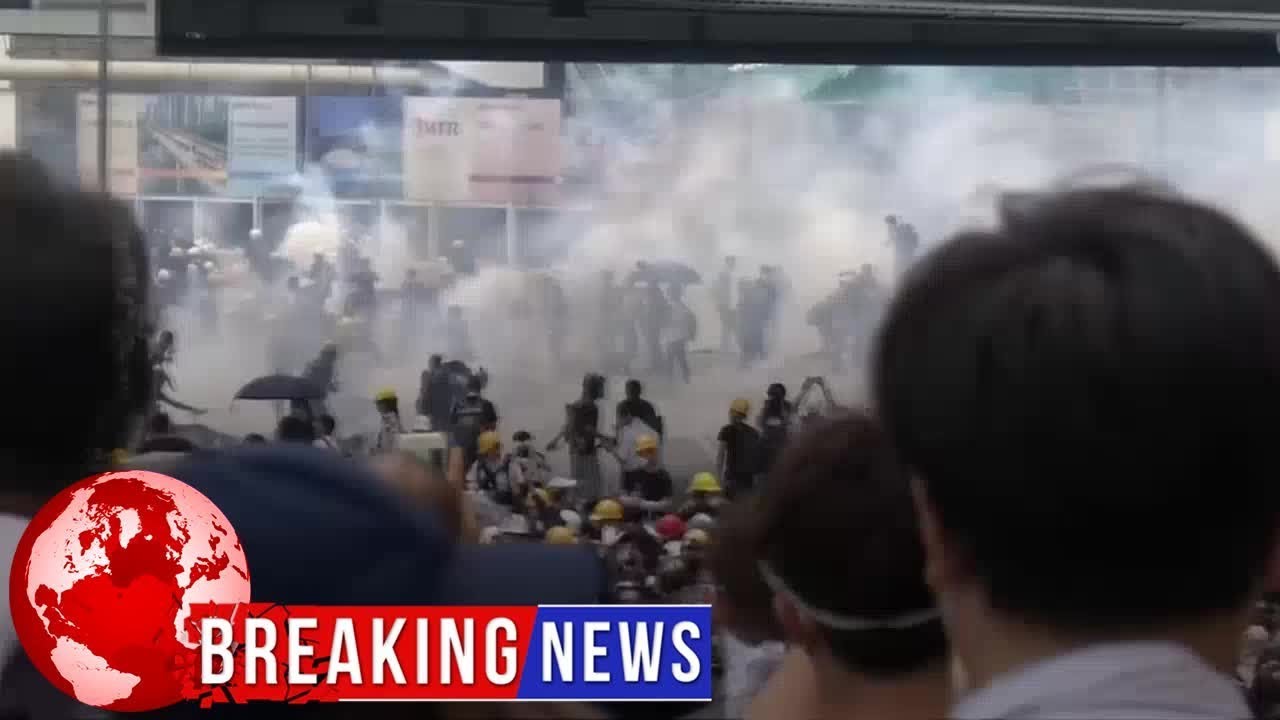
 Authorities have shut some government offices in Hong Kong's financial district after the worst violence the city has seen in decades. By Thursday morning the crowds had largely dispersed around government headquarters - where police and protesters had pitched battles on Wednesday. The protesters are angry about plans to allow extradition to mainland China. Despite the widespread opposition, the government has not backed down. However, Hong Kong's Legislative Council (LegCo) delayed a second reading of the controversial extradition bill and it is unclear when it will take place. The second reading, or debate over the extradition bill was originally scheduled for Wednesday. In an attempt to prevent lawmakers from participating in the debate, activists in the tens of thousands blockaded key streets around the government headquarters in central Hong Kong. Police were also out in riot gear. Later the tensions boiled over as protesters tried to storm key government buildings demanding the bill be scrapped. Police responded by firing tear gas and rubber bullets to block them and get them to disperse. After hours of chaos, the crowd eventually dissipated overnight. Rights group Human Rights Watch accused the police of using "excessive force" against protesters. Seventy-two people aged between 15 and 66 were injured in the violence, including two men who were in critical condition. After the violence on Wednesday, Hong Kong leader Carrie Lam, in a tearful address, called the protests "organised riots", and dismissed accusations that she had "sold out" Hong Kong. Only a handful of protesters remained in the central business district in the city on Thursday morning, though some roads and a downtown shopping mall still remain closed, said local broadcaster RTHK. Hong Kong's train operator, the MTR, said that Admiralty station - the station at the heart of the protest zone - would remain closed today following a police request. The protesters are expected to return, however, when the second reading of the controversial bill eventually takes place, our correspondents say. The morning after the most violent protests Hong Kong has seen in decades, the scene outside the Legislative Council complex is quiet. Debris is strewn about the roads - umbrellas, surgical masks - the aftermath of a serious confrontation. Areas are still being cordoned off by police in riot gear, but there are no signs of protesters returning. There is one elderly man shouting at police - he might seem like a lone voice, but anger against the police use of force is widespread. As things stand, there is no fixed date for the reading of the extradition bill, although we'd expect that to happen next week. Many members of the public, and the government, will feel a sense of shock. They all learned something about Hong Kong's youth: the strength of their feeling about Hong Kong's political integrity is not to be underestimated. They also showed they can get organised very q


Hong Kong in shock after anti-extradition violence
Authorities have shut some government offices in Hong Kong's financial district after the worst violence the city has seen in decades. By Thursday morning the crowds had largely dispersed around government headquarters - where police and protesters had pitched battles on Wednesday. The protesters are angry about plans to allow extradition to mainland China. Despite the widespread opposition, the government has not backed down. However, Hong Kong's Legislative Council (LegCo) delayed a second reading of the controversial extradition bill and it is unclear when it will take place. The second reading, or debate over the extradition bill was originally scheduled for Wednesday. In an attempt to prevent lawmakers from participating in the debate, activists in the tens of thousands blockaded key streets around the government headquarters in central Hong Kong. Police were also out in riot gear. Later the tensions boiled over as protesters tried to storm key government buildings demanding the bill be scrapped. Police responded by firing tear gas and rubber bullets to block them and get them to disperse. After hours of chaos, the crowd eventually dissipated overnight. Rights group Human Rights Watch accused the police of using "excessive force" against protesters. Seventy-two people aged between 15 and 66 were injured in the violence, including two men who were in critical condition. After the violence on Wednesday, Hong Kong leader Carrie Lam, in a tearful address, called the protests "organised riots", and dismissed accusations that she had "sold out" Hong Kong. Only a handful of protesters remained in the central business district in the city on Thursday morning, though some roads and a downtown shopping mall still remain closed, said local broadcaster RTHK. Hong Kong's train operator, the MTR, said that Admiralty station - the station at the heart of the protest zone - would remain closed today following a police request. The protesters are expected to return, however, when the second reading of the controversial bill eventually takes place, our correspondents say. The morning after the most violent protests Hong Kong has seen in decades, the scene outside the Legislative Council complex is quiet. Debris is strewn about the roads - umbrellas, surgical masks - the aftermath of a serious confrontation. Areas are still being cordoned off by police in riot gear, but there are no signs of protesters returning. There is one elderly man shouting at police - he might seem like a lone voice, but anger against the police use of force is widespread. As things stand, there is no fixed date for the reading of the extradition bill, although we'd expect that to happen next week. Many members of the public, and the government, will feel a sense of shock. They all learned something about Hong Kong's youth: the strength of their feeling about Hong Kong's political integrity is not to be underestimated. They also showed they can get organised very q


0 Comments